The games are older than the websites
Every slot, wheel and card table in a modern lobby carries a bit of history in its design. Here is the part of it that can be checked, with the invented statistics left out.
Where the cards came from
Playing cards turn up in European records in the 1370s, and the earliest mentions are mostly complaints: city authorities in Spain, Italy and Switzerland banning them almost as soon as they appeared. The cards themselves came west from the Islamic world, and the early European packs used suits like cups, coins, swords and batons — a system that survives in Italian and Spanish decks to this day.
The four suits on your screen are French. Spades, hearts, diamonds and clubs were settled in France around 1480, and they won out for a thoroughly practical reason: the shapes are simple enough to print with two stencils and two colours, which made French packs far cheaper to produce than the multi-coloured German and Italian designs. Cheap printing, not elegance, is why a blackjack table in Manchester uses the same symbols as one in Manila.
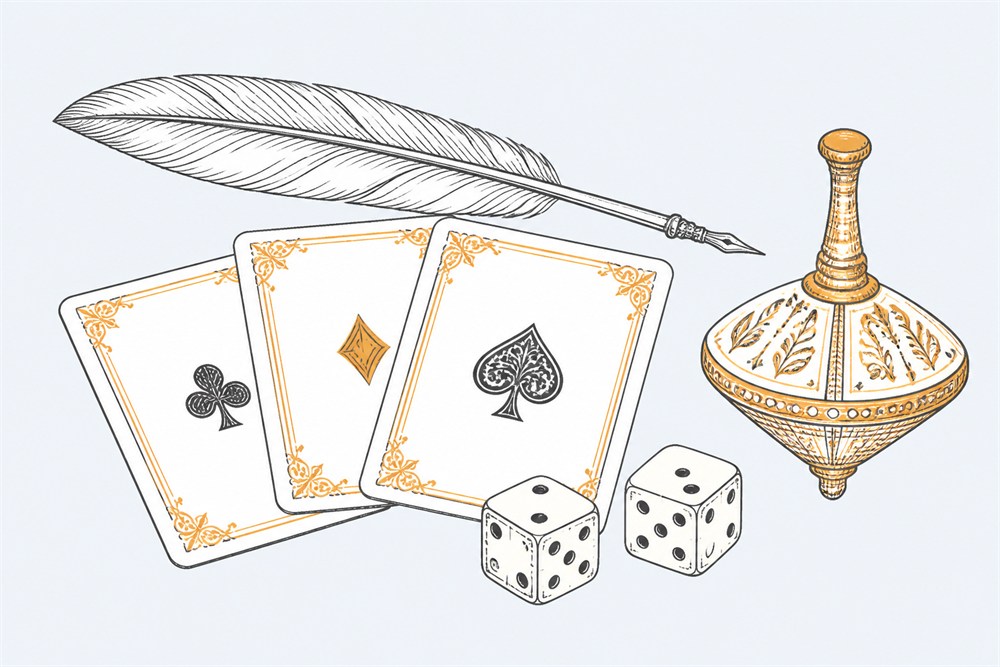
The standard 52-card pack has a piece of arithmetic worth knowing. There are exactly 2,598,960 different five-card hands you can be dealt from it. That single number explains why poker hand rankings look the way they do: the rarer the combination, the higher it sits.
The wheel, and why it lost a zero
Roulette means “little wheel” in French, and the game as we know it took shape in Paris in the late eighteenth century with both a zero and a double zero. In 1843 the brothers François and Louis Blanc opened a casino at Bad Homburg with a wheel that had the double zero removed — a straightforward competitive move, since fewer pockets meant a smaller edge for the house and a better proposition for the player.
It worked, and the single-zero layout became the European standard. American tables kept the double zero, which is why the two versions still carry noticeably different odds. If a lobby offers you both, the arithmetic below is the whole story.
- 37 pocketsEuropean roulette: the numbers 1 to 36 plus a single zero.
- 38 pocketsAmerican roulette: the same numbers plus zero and double zero.
- 2.70%The house edge on a European wheel — one pocket in thirty-seven.
- 5.26%The house edge on an American wheel. Same game, nearly double the cost.
- 666Add the numbers 1 to 36 together and that is the total. It is arithmetic, not an omen.
The machine that started it all
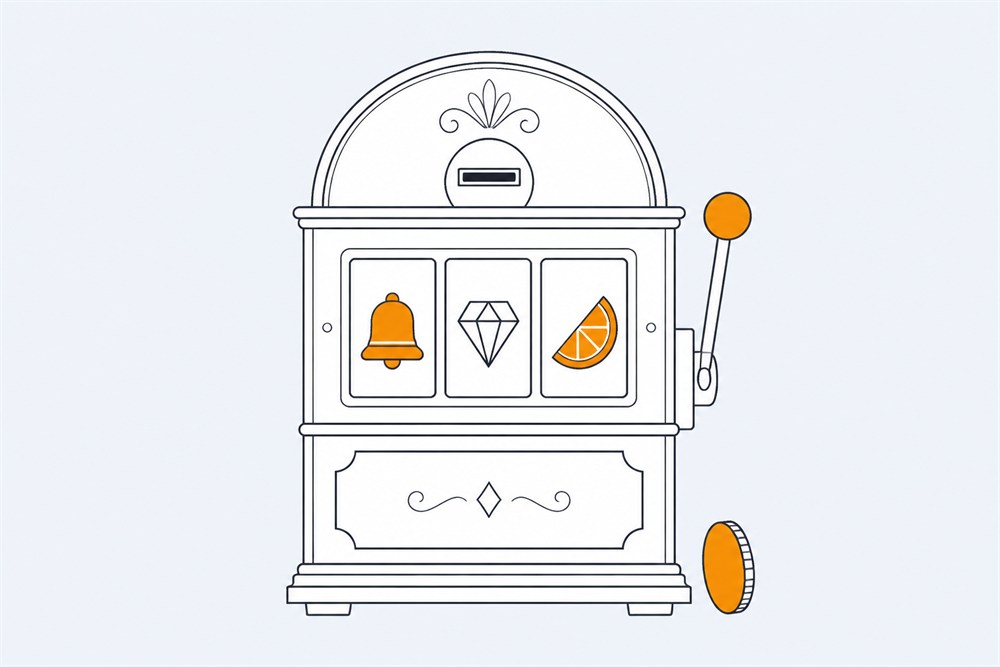
Charles Fey, a mechanic working in San Francisco in the late 1890s, built the machine that every slot descends from. His Liberty Bell used three reels rather than the five drums of earlier poker-style machines, and that simplification was the breakthrough: with only three reels the payouts could be worked out mechanically, so the machine could pay a winner itself instead of a bartender settling up by hand.
Why there is fruit on the reels
The fruit is a legal artefact. When cash payouts fell foul of American gambling restrictions in the early twentieth century, manufacturers had machines dispense chewing gum and sweets instead, and the symbols showed the flavour you had won — cherry, lemon, orange, plum. The prize changed back to money; the pictures stayed.
The BAR symbol has the same origin. It began as the logo of the Bell-Fruit Gum Company, which supplied those packets, and it survived into modern slots as a shape most players recognise without ever knowing it was once a brand. The bell, meanwhile, is a direct inheritance from Fey's Liberty Bell.
Names worth knowing
- Casino
- Italian, and originally rather modest: a diminutive of casa, a house, used for a small country villa or garden pavilion. It only came to mean a public gaming room in the nineteenth century.
- Jackpot
- From draw poker. In one variant nobody could open the betting without a pair of jacks or better, so on hands where no one qualified the stakes stayed on the table and rolled into the next deal. The pot built up — a jacks pot.
- Blackjack
- The game is the French vingt-et-un, twenty-one. The English name comes from an American promotional payout for a hand made of the ace of spades and a black jack.
- Baccarat
- Two versions matter. Punto banco is the one in almost every online lobby, where the house banks every hand and the decisions are fixed by the rules. Chemin de fer, where players take turns banking, is the older and rarer form.
Two modern facts about the games themselves
Megaways is not a genre, it is a licence. Big Time Gaming built the mechanic — reels whose symbol count changes on every spin — and released it in Bonanza in 2016, then licensed it to other studios. That is why games from a dozen different developers carry the same word in their titles and behave in the same broad way.
The other is regulatory. Games offered by a UK-licensed operator have to be tested against the Gambling Commission's technical standards by an approved test house before they go live, and random number generators are part of that testing. It is why the info panel inside a slot can tell you its return-to-player figure at all: the number is a tested property of the game, not marketing.
One thing none of this does
Knowing where a game came from will not change what it does next. Every result in a licensed casino game is produced by a tested random number generator with no memory of the last spin, so history is interesting and nothing more. If you would like the practical side instead, our guide to staying in control covers limits, session length and the signs worth watching for.
Disclaimer. Wager Landmark is an independent, affiliate-funded comparison site. We do not operate games, hold player accounts or take part in play or money handling. This page is background reading and carries no betting advice: nothing here improves the odds of any game. Gambling is entertainment that costs money and is never a way to make money. 18+ only.